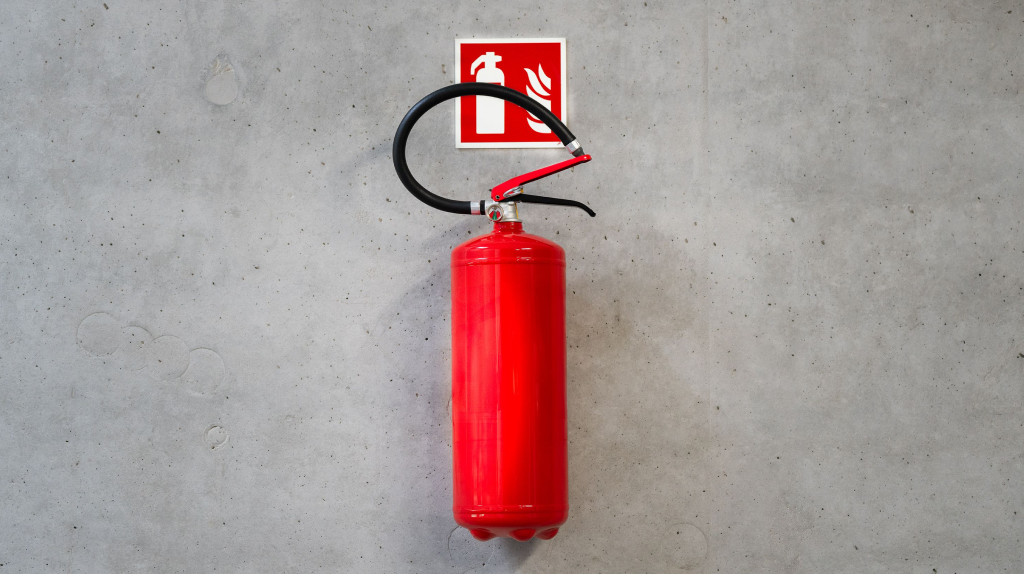
How Inland Empire Heat Affects Your Fire Safety Equipment
Check the Pressure Gauge Monthly
The pressure gauge is your first line of defense in determining whether a fire extinguisher will actually work when you need it. In the Inland Empire’s extreme summer heat, extinguishers can lose pressure faster than in cooler climates, making monthly fire extinguisher inspection checks even more critical for Southern California businesses.
Look for the needle to sit firmly in the green zone. If it’s dipped into the red (either too high or too low), that extinguisher is compromised and needs immediate professional attention. During Lake Elsinore’s triple-digit summer days, heat expansion can push gauges into the overcharged zone, while winter lows might reveal slow leaks you didn’t know existed. Understanding the difference between these two red-zone conditions is crucial: a gauge reading too high indicates dangerous overpressurization that can cause the extinguisher to burst or malfunction during discharge, while a gauge reading too low signals pressure loss from seal degradation, micro-leaks in the valve assembly, or temperature cycling that has weakened the cylinder’s internal pressure over time.
Pressure loss happens gradually and invisibly. Microscopic leaks around the valve stem, deterioration of internal seals, and repeated temperature swings between scorching Inland Empire afternoons and cool desert nights all contribute to slow pressure bleed-off. An extinguisher might look perfect on the outside while sitting at 75 percent pressure internally, enough to pass a casual glance but not enough to deliver a full, effective discharge when a fire breaks out. This is why documenting your checks matters as much as performing them.
Don’t just glance at the gauge from across the room. Get close enough to read it clearly, and if you manage multiple locations or a large facility, keep a simple checklist that forces you to document each unit’s status. Record the date, location, unit serial number, gauge reading, and any observations about physical condition or accessibility. This creates a paper trail that fire inspectors appreciate and helps you spot patterns, like one hallway where every extinguisher seems to lose pressure faster due to a nearby heat source such as a boiler room, sun-exposed exterior wall, or kitchen exhaust vent.
Action Fire Protection has been conducting fire protection services across the Inland Empire since 1996, and we consistently find that businesses with strong monthly self-check habits catch problems early, saving both money and potential lives. If you notice a gauge outside the green zone, that’s your cue to call for professional service before the next inspection cycle. Our technicians carry calibrated testing equipment that measures actual internal pressure, not just gauge needle position, ensuring your extinguishers will perform exactly as designed when every second counts.
Inspect the Safety Seal and Tamper Pin
The safety seal and tamper pin are critical indicators showing whether a fire extinguisher has been used or compromised since its last inspection. These components serve as your first line of defense in determining if an extinguisher is ready for emergency use.
Examine the plastic or metal seal around the operating lever and neck of the extinguisher. This seal should be completely intact with no signs of breaking, cracking, or tampering. Any damage indicates potential unauthorized use or discharge, requiring immediate professional inspection and possible refilling.
Check the tamper pin running through the operating lever. This pin prevents accidental discharge and must be firmly in place with the retention tag attached. The pin should show no signs of bending, partial removal, or reinsertion attempts. A missing or damaged tamper pin means the extinguisher may have been activated and could be empty or partially discharged.
Document the condition of both components during each monthly inspection. If you discover either is broken or missing, immediately remove the extinguisher from service and replace it with a backup unit while arranging for professional servicing. Never attempt to operate an extinguisher with a compromised seal or missing pin.
For businesses in Lake Elsinore and surrounding areas including Corona, Perris, and Murrieta, maintaining detailed records of seal and pin inspections protects your employees and demonstrates compliance with fire safety regulations. Professional fire protection services can help establish proper inspection protocols and provide replacement extinguishers when compromised units are discovered.
Verify the Inspection Tag Date
California fire code requires annual professional fire extinguisher inspection of every unit in your building, and the dated service tag is your proof of compliance. Fire marshals look for this tag first during unannounced inspections, and an expired tag can trigger citations even if the extinguisher itself is in perfect working order.
The service tag must contain more than just a date and technician signature. Look for the inspection date, the name and certification number of the technician or company that performed the work, the extinguisher’s serial number to verify that the correct unit was inspected, internal inspection notes indicating whether internal components were examined or the cylinder was opened, and for older units subject to hydrostatic testing, the date of the last pressure vessel test. Missing any of these elements can render the tag non-compliant during a fire marshal review, even if the work was performed correctly.
The liability and insurance implications of expired or missing service tags extend far beyond fines. If a fire occurs and your extinguishers have lapsed inspection tags, your commercial liability insurer may deny coverage for fire-related damages, arguing that you failed to maintain required safety equipment. Worse, if an employee or customer is injured and it’s discovered that extinguishers were not code-compliant, you face personal injury claims with significantly weaker legal standing. The cost of an annual inspection is a fraction of the financial and legal exposure you accept by letting tags expire.
If you’re approaching or past that annual mark, it’s time to schedule service. In the fast-paced Inland Empire business environment, it’s easy to let this slip, but the consequences, a failed inspection, potential fines, insurance complications, and the knowledge that your fire protection system isn’t legally compliant, aren’t worth the delay.
Don’t confuse the monthly self-check you perform with the annual professional certification. Your monthly walkthroughs catch obvious problems like gauge issues or visible damage, but only a licensed technician has the training and tools to verify internal pressure accuracy, weigh the extinguishing agent to confirm it hasn’t settled or leaked, inspect hose integrity from the inside, test discharge mechanisms without fully emptying the unit, and evaluate proper mounting hardware and wall anchor strength, all of which go far beyond what a business owner can assess visually. Professional inspections also include a six-year internal examination requirement for most extinguisher types and a twelve-year hydrostatic test for pressure vessels, procedures that require specialized equipment and cannot be performed on-site during routine checks.
Action Fire Protection coordinates annual fire extinguisher inspection schedules for hundreds of Inland Empire businesses, sending reminders before your tags expire and offering same-day service to keep you compliant. Since 1996, we’ve built our reputation on thorough, documented inspections that stand up to the strictest fire marshal reviews, and our detailed service records give you defensible proof of compliance if you ever face an audit or liability claim.
Check for Visible Damage or Corrosion
Physical damage compromises an extinguisher’s integrity in ways that aren’t always obvious until you actually need it. Dents, rust, corrosion, or cracks in the body, hose, or nozzle can prevent proper discharge, and in extreme cases, a damaged cylinder can rupture under pressure.
Learning to distinguish cosmetic wear from structural damage is critical. Light surface scratches, scuffed paint, and minor discoloration are cosmetic issues that don’t affect functionality. However, a dent that has created a crease or sharp angle in the cylinder wall, rust that has pitted the metal or created flaking patches, corrosion around the valve threads or base ring, cracks in the plastic hose or nozzle assembly, or a bent carrying handle that has stressed the cylinder shoulder are all structural problems that require immediate removal from service. When in doubt, pull the unit and have a professional evaluate it; the cost of an unnecessary replacement is trivial compared to the consequence of a catastrophic failure during discharge.
In Southern California’s Inland Empire, outdoor or semi-outdoor extinguisher placements face unique challenges. Units mounted near loading docks, outdoor kitchen hood systems, or spray booth areas are exposed to temperature swings, moisture from early-morning condensation, and abrasive dust that accelerates corrosion. Even indoor units in older buildings can develop rust if they’re near restrooms, kitchens, or HVAC vents that introduce humidity. The specific types of corrosion vary by environment: kitchen-mounted extinguishers often accumulate grease film that traps moisture and creates localized corrosion on valve bodies; warehouse units near floor drains or dock doors develop base rust from standing water and floor-cleaning runoff; outdoor extinguisher cabinets in full sun experience UV degradation of plastic components and paint breakdown that exposes bare metal to oxidation.
During your monthly inspection, run your hand along the body and check the base where moisture tends to collect. Look closely at the hose and nozzle for cracks, brittleness, or blockages. If you spot a dent larger than a quarter, visible rust, or any crack, that extinguisher should be pulled from service immediately and replaced. Documenting damage with photos and written notes is essential for both insurance claims and compliance records; if a fire occurs and a damaged extinguisher failed to operate, your documentation proves you identified the problem and took corrective action, protecting you from negligence allegations.
When it comes to cleaning versus replacement, the rule is simple: you can clean external dirt, dust, and grime from the cylinder body and label, but never attempt to clean internal components, repair structural damage, or remove corrosion that has compromised the metal. If you’re unsure whether corrosion is surface-level or structural, replacement is always the safer choice. Action Fire Protection’s inspection process includes detailed visual and tactile checks for damage that untrained eyes often miss. We’ve found corroded mounting brackets that were one strong bump away from dropping a 20-pound extinguisher onto someone’s foot, and nozzles so clogged with dust and debris that they wouldn’t have discharged even with perfect pressure. When we identify damage, we don’t just flag it; we bring replacement units to the job so your fire protection never has a gap.
Ensure Proper Accessibility and Signage
An extinguisher is only useful if people can find it and reach it in the critical first seconds of a fire. Code requires that extinguishers be mounted in visible, accessible locations with clear signage, yet we routinely find units hidden behind stacked inventory, blocked by furniture, or mounted so high that a 5’2″ employee would need a ladder to retrieve one during an emergency.
California fire code specifies precise requirements for mounting and accessibility. Extinguishers weighing less than 40 pounds must be mounted so the top is no more than five feet above the floor, while heavier units must have their tops no more than three and a half feet high. The maximum travel distance from any point in the building to the nearest extinguisher is 75 feet for Class A hazards (ordinary combustibles like wood, paper, and fabric) and 50 feet for Class B hazards (flammable liquids and gases). A minimum clearance of 36 inches must be maintained in front of each extinguisher at all times, and wall-mounted units should be installed on brackets that hold them securely but allow quick removal without tools or excessive force.
Walk your building from the perspective of someone who doesn’t work there every day. Can you spot the extinguisher signage from across the room? Is the path clear, or would someone have to move a pallet, squeeze past equipment, or open a door to access it? In the Inland Empire’s fast-growing logistics and manufacturing sectors, floor plans change constantly, and an extinguisher that was perfectly accessible last quarter might be blocked by a new shelving unit today. Conducting an accessibility audit means walking every aisle, hallway, and room with a clipboard, noting the location of each extinguisher, measuring the actual travel distance from the farthest point in each space, photographing any obstructions, and checking that clearance zones are marked on the floor if necessary in high-traffic areas.
Create a remediation plan that prioritizes the most serious access problems first: completely hidden or blocked units, extinguishers in areas that have added new fire hazards since the original placement, and locations where travel distance now exceeds code limits due to building expansions or reconfigurations. For multi-floor or multi-building facilities, assign each area to a specific manager responsible for monthly access checks, and include accessibility as a line item on every safety meeting agenda.
Common accessibility mistakes during business expansions or seasonal inventory changes are predictable and preventable. Retailers block extinguishers with holiday displays or end-cap promotions. Warehouses stack pallets in front of wall-mounted units during peak shipping season. Offices rearrange furniture during remodels and forget to verify that extinguisher access remains clear. Restaurants add temporary storage racks in kitchens that create blind corners where extinguishers disappear from view. The solution is simple but requires discipline: before any layout change, renovation, or seasonal stock increase, walk the space with a facilities checklist and verify that every extinguisher remains visible, reachable, and within code-compliant travel distances.
Signage must be visible even in low light or smoke. Reflective or illuminated signs work best, and California code specifies mounting heights and clearances. If your extinguisher is tucked into a corner or mounted in a recessed alcove, make sure the signage extends into the main sightline. Action Fire Protection doesn’t just inspect the extinguisher itself; we evaluate its placement and accessibility as part of every fire protection services visit. We’ve helped hundreds of Southern California businesses re-layout their fire safety equipment after expansions, remodels, or workflow changes, ensuring that every extinguisher is exactly where it needs to be when seconds count.